
Lost Pet Tracking: How to Use GPS for Faster Recovery
If you’re searching for lost pet tracker that actually helps you bring your dog or cat home, you’re in the right place. A GPS pet tracker is a recovery tool first. It can send geofence alerts, but accuracy and battery life matter far more when it’s time to find a lost pet fast. In this guide, I’ll explain how GPS, WiFi and LBS positioning work together, why false alarms happen, and the recovery-first settings we recommend to get dependable, real-time location when you need it most.
Short on time?
If your pet is missing right now (do this first)
- Switch the tracker to Live/Recovery Mode for rapid updates.
- Share a real-time tracking link with family/neighbours/helpers.
- Check the last strong GPS fix. Note direction of travel and likely routes (gates, paths, greenbelts).
- Start searching on foot within a 1–2 km radius (dogs) or 3–5 house radius (cats). Ask neighbours; look under decks, in garages and sheds.
- Print a quick flyer with a clear photo and two phone numbers.
- Call nearby shelters and vets; confirm microchip details are up to date.
- Post on local Facebook/WhatsApp/Neighbourhood groups with the live link.
- If it’s night or fireworks/storms: carry a torch, walk quietly, and bring high-value treats.
Set your tracker up for recovery-first use: Compare battery life across TailMe trackers and enable “Lost Pet Mode” before you head out.
How Pet GPS Trackers Work (GPS, WiFi, LBS)
A pet tracker uses several location signals:
- GPS for precise outdoor location.
- WiFi positioning to estimate location using nearby networks when GPS is weak (useful around buildings).
- LBS/cell-tower positioning as a broad backup when both are limited.
That location is sent to your phone over the mobile network (4G/IoT). In day-to-day use, smart software slows updates when your pet is sleeping to preserve battery. When you need fast updates, you switch to Live Tracking or Recovery Mode—prioritising frequent pings so you can walk straight to your pet.
Geofencing Limits: Accuracy, False Alarms, and Stress
Geofences draw a virtual boundary around your home. They sound great as an early-warning system, but real-world accuracy varies:
- GPS drift: Indoors or near tall buildings, GPS can be off by a few metres. Pets lounging near a boundary can trigger a “left home” alert even when they haven’t.
- WiFi/LBS handoffs: As signals switch, short-lived jumps can occur—more false positives.
- Alert fatigue: Too many pings erode trust, and owners start to ignore them.
Geofence alerts can be useful nudges, but they’re not proof your pet is lost. Treat them as a cue to peek at the map—not as a panic button. The real safety net is a well-charged tracker ready to deliver reliable, live location.
Battery Life = Rescue Power: Settings That Matter
A flat tracker can’t help you. Optimise for the moment that counts:
- Balanced update schedule: Use standard update intervals day-to-day; save Live Tracking for when your pet is moving or missing.
- Motion-aware updates: Let the tracker sleep when your pet sleeps; wake on movement.
- WiFi Assist at home: Improves indoor placement and reduces noisy GPS checks.
- BLE Beacon for indoors: Add a Bluetooth Beacon for multi-level homes and apartments to tighten indoor accuracy.
- Live/Recovery Mode: Switch to high-frequency updates only during a search.
- Share the live link: The more eyes on the map, the faster the recovery.
- Coverage check: Ensure your tracker’s 4G coverage is strong where you walk and travel. Enable roaming if you cross borders.
Battery tips:
- Charge nightly like a phone, or every 2–3 days on long-life models.
- Keep firmware up to date for the latest battery optimisations.
- Avoid constant forced refreshes—they drain the battery quickly.
- Cold weather reduces capacity; charge sooner in winter.
Step-by-Step: What To Do When Your Pet Goes Missing
- Switch to Live Tracking (Lost Pet Mode) and note the last accurate GPS fix.
- Head toward the last fix. Move slowly; refresh only every 10–20 seconds to conserve battery.
- Share the live link with helpers. Assign zones: parks, greenbelts, favourite routes.
- Dogs: expand the search radius along footpaths and roads; look for paw prints, ask joggers and gardeners.
- Cats: search close to home first—under decks, cars, crawl spaces. Return at dawn and dusk when cats are most active.
- Carry treats or a scent article (their bed/blanket). For nervous pets, sit and let them come to you.
- Call shelters and vets; log your case. Keep your phone volume up.
- Update your posts with a clear time-stamped sighting and the live link.
- If the battery is low: reduce update frequency between movements; charge from a power bank between checks.
Seasonal tip: During fireworks or storms, many pets hide nearby. Keep doors cracked open, lights low, and food/water out. Walk the block quietly with your live map open.
AirTag vs GPS vs Microchip: What’s Best for Recovery?
- GPS Pet Tracker (TailMe Infinity/Agile): Live tracking over 4G with GPS/WiFi/LBS. Best for active recovery and route-by-route searching. Works anywhere with network coverage.
- Bluetooth Tags (TailTags/AirTag-compatible): Great as a budget backup for short-range finding or dense urban Bluetooth networks. Not reliable for live tracking across suburbs or rural areas.
- Microchip: Essential permanent ID for shelter/vet reunions—but it can’t live-track.
Short answer: Microchip for ID, GPS for finding, Bluetooth tag as a handy extra for close-range pings. They’re complementary, not substitutes.
Which TailMe tracker fits a recovery-first setup?
- Longest battery for dogs: Infinity 4G / Infinity Pro — reliable 4G coverage, robust battery, waterproof for adventure dogs.
- Best for small cats: Agile Pro — lightweight with live tracking that won’t weigh them down.
- Indoor support: BLE Beacon — adds room-level context in multi-storey homes.
- Budget/backup tag: TailTags (Apple/Android compatible) — helpful close-range pings; know its Bluetooth-network limits.
- Everyday all-rounder: Nimble GPS — compact and capable for mixed indoor/outdoor pets.
Best Practices to Charge and Use Your Tracker Daily
- Charge nightly or keep above 50% if your pet is an escape artist.
- Keep update frequency moderate during calm periods.
- Enable WiFi Assist at home; add a BLE Beacon for tricky indoor areas.
- Fit the collar snugly; a bouncing tracker reduces GPS quality.
- Update firmware and app regularly for accuracy and battery improvements.
- Test Live Mode monthly so you’re confident when time matters.
Why “Preventing” a Lost Pet Isn’t So Simple
It’s natural to hope a tracker will prevent escapes. But even the best tech can’t read intent. A geofence can’t tell the difference between:
- A dog walking the kids to the park,
- A cat sunning at the edge of the garden,
- Or a genuine bolt through an open gate.
Trackers shine in recovery—guiding you straight to your pet once they’ve gone. Focus on dependable location when it counts, not constant pings that drain the battery and raise false alarms.
Real results: customer story
“Peace of Mind and Daily Companionship: Wallace’s Experience with the Infinity GPS Pet Tracker” — See how Wallace’s family used battery-friendly settings and Live Mode to recover him quickly after an unexpected dash.
FAQs
Q: Can a GPS tracker prevent my pet from getting lost?
A: No. It’s a recovery tool, not a fence. Use it to find your pet quickly if they do slip out. Pair with training, secure fencing, ID tags, and a microchip.
Q: How accurate are geofence alerts?
A: They’re estimates. GPS drift and indoor environments can cause false positives, especially near boundaries. Use them as a prompt to check the map, not proof your pet has left.
Q: How do I extend my pet tracker’s battery life?
A: Charge routinely, use balanced update intervals, enable motion-based updates, and reserve Live Mode for searches. WiFi Assist and BLE Beacons can also reduce needless GPS checks.
Q: Is an AirTag good enough to track my dog or cat?
A: It’s helpful for close-range pings, especially in dense urban areas, but it doesn’t provide independent, continuous live tracking like a GPS pet tracker on 4G.
Q: What should I do first if my pet goes missing?
A: Switch to Live Mode, share the link, head to the last accurate fix, organise helpers, and call shelters/vets. Move slowly and keep refreshing sensibly to preserve battery.
Prevention alternatives (to complement tracking)
- Secure fencing and latch checks before walk time.
- ID tag with two phone numbers and a QR code.
- Microchip with updated contact details.
- Recall training and desensitisation ahead of fireworks.
- A calm “home base” with familiar scents.
Related Products




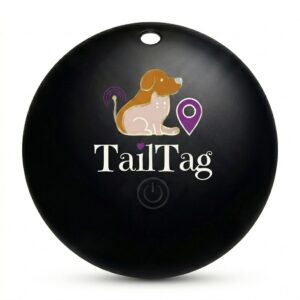
TailTags – Apple AirTag Compatible Tracking Tag for Apple and Android
TailTags is an affordable, lightweight...
