The Physics of Pet Tracking: How Small GPS Trackers Balance Battery Life, Size, and Safety

When shopping for a GPS pet tracker, every pet owner runs into the exact same question: Why doesn’t a tiny collar tracker have the same battery life as my smartphone—or a TailTag (Apple AirTag)?
The answer comes down to simple physics. To be comfortable on a cat or dog’s neck, a tracker must be lightweight and compact. That means the battery inside has to be tiny. Yet, inside that miniature casing sits a full satellite GPS receiver, a cellular modem, a Wi-Fi scanner, and a Bluetooth transmitter.
If all of those components ran at full power 24/7, a collar-sized battery would be dead in a single afternoon.
To give you days—or even weeks—between charges without sacrificing your pet’s safety, the TailMe Pro range doesn’t just use a battery; it uses intelligent power management. Here is an inside look at what actually drains a pet tracker’s battery, how the technology adapts to your pet’s daily routine, and how to choose the right model for your dog or cat.
What Actually Drains a Pet Tracker’s Battery?
Inside every active GPS tracker, five main technologies work together. Understanding how much energy each one costs is the secret to understanding battery life:
- The Satellite GPS Chip (Highest Drain): Communicating with satellites orbiting thousands of kilometres in space requires significant power—especially if the tracker is indoors and trying to “burn” through a concrete roof to find a signal.
- The Cellular Modem (High Drain): Sending those GPS coordinates to your phone over mobile networks takes energy. If a cellular modem is left “always on,” it acts like a slow leak in your battery tank. If the signal is weak it drains even faster.
- The Wi-Fi Scanner (Moderate Drain): Scanning nearby Wi-Fi router names to figure out indoor locations uses a fraction of the power of satellite GPS but provides a less accurate location. Noteworthy, is that when the Wifi Scanner method is used it implies the GPS method was attempted but reached a battery saving timeout.
- Location of the Base Station (LBS): As the final fallback the LBS location uses the location of the cellular tower the tracker is connected to. As with point 3, this implies that both the GPS and Wifi method reached a timeout using maximum power.
- Bluetooth Low Energy / BLE (Lowest Drain): Emitting or listening for a short-range Bluetooth signal uses virtually zero power.
The Golden Rule of Battery Life: A smart tracker never uses a high-power tool when a low-power tool will do the job.
How the TailMe Pro Range Stretches Every Drop of Power
Rather than blindly searching for satellites all day, TailMe Pro trackers operate like a relay team—handing off positioning duties from the lowest-power components to the highest-power components only when necessary.
1. The “Home Mode” Secret: Bluetooth Beacons & Trusted Wi-Fi
Most pets spend 70% to 90% of their lives sleeping indoors or lounging in the garden. If a tracker keeps its GPS chip active while your pet is asleep under a tiled or metal roof, it wastes massive amounts of battery fighting the ceiling.
TailMe solves this with Home Mode:
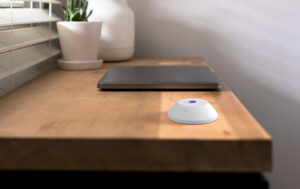
- Bluetooth (BLE) and Home Wifi Beacons: You plug a tiny Bluetooth beacon near your pet’s favourite sleeping spot or router room or register your home Wi-Fi as a “Trusted Network” in the app.
- The Known Location: As long as your pet’s tracking collar detects that Bluetooth beacon or your home Wi-Fi, the tracker knows: I am safely at home. This also gives absolute accuracy because there is no location outside of your home where your home beacons are present.
- The Result: It immediately puts the power-hungry GPS chip into deep standby. Your app shows your pet is safely in their Home Zone, and your battery lasts longer.
2. Smart GPS Timeouts (No “Roof Fighting”)
When your pet leaves the Home Zone and steps into Away Mode, the GPS wakes up.
- Outdoors: With a clear view of the sky, your tracker grabs a fast satellite fix in just a few seconds, then immediately powers the GPS chip back down until the next scheduled check-in.
- Indoors (Away from Home): If your cat slips into a neighbour’s garage where satellites can’t reach, the tracker doesn’t sit there draining its battery trying to see through the iron roof. It tries briefly, times out, and automatically switches to Wi-Fi Sniffing—using nearby residential router IDs to give you an indoor location. Logically the tracker does not know if it remains on for a few more seconds if it will get a GPS location. It therefore needs to conserve power when it can.
3. NB-IoT vs. 4G: Smarter Cellular Data
Traditional 4G cellular networks were built for humans streaming high-definition video—they prioritise speed over battery life. Your pet tracker doesn’t need to stream video; it only needs to send tiny text-sized bursts of location coordinates.
Benefits NB-IoT (Narrowband IoT):
- Ultra-Low Power: It uses significantly less battery per location update than traditional 4G.
- Deeper Penetration: NB-IoT signals travel further and penetrate deeper into dense suburbs, garages, and culverts than standard cellular bands.
(Note: While NB-IoT coverage is extensive, some remote rural pockets only support standard 4G. Always check local coverage when choosing your model). Very importantly, NB-IoT is still in the roll out phase in South Africa meaning some areas are covered on the map but still have poor signal (which unfortunately uses more power).
Quick Tips to Maximise Your Tracker’s Battery
If you want to squeeze the maximum number of days out of every charge, set your tracker up for success on Day One:
- Always Pair a BLE Beacon: Especially for cats and indoor-sleeping dogs, adding a Bluetooth beacon into your home is the single biggest battery multiplier available.
- Add Your Trusted Wi-Fi: Enter your home Wi-Fi details into the app so your entire house acts as a low-power safe zone.
- Pick a Sensible Update Interval: A 5- to 10-minute update schedule in Away Mode uses more power than a 60-minute interval. Finding your sweet spot for day-to-day safety and battery efficiency is key.
- Schedule Night-Time Sleep Windows: If your pet is locked safely indoors every night between 9:00 PM and 6:00 AM, use this time to charge the tracker.
- Top Up Regularly: Lithium batteries prefer partial top-ups over being drained to 0% every time. A quick 30-minute top-up during your pet’s dinner time keeps your emergency reserves full.
- Best Quality Signal: Signal strength is a silent battery drain. Use the network thats strongest in your area.
Frequently Asked Questions
Does GPS work indoors?
No satellite GPS can work reliably under roofs—buildings block satellite signals.
Why does the Agile Pro have half the battery life of the Infinity Pro?
Weight! To make the Agile Pro safe and comfortable for small pet’s neck, the battery is a third the physical size—yielding less battery duration. Although to squeeze every bit of battery duration out, it uses more aggressive battery saving technology.
What happens if my pet goes into an underground drain or a shopping mall?
When satellite signals drop out completely, the tracker stops searching for GPS to save power and switches to Wi-Fi assisted location (reading nearby router IDs) and cellular triangulation.
Not sure whether your suburb has NB-IoT coverage or which size suits your pet?
Reach out to the TailMe team—we’ll happily check the network coverage in your area and help you match the right tracker and beacon setup to your pet’s daily routine.
Related Products
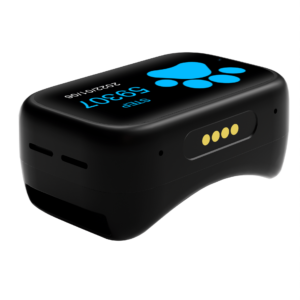

Infinity Pro Extended-Battery GPS Dog Tracker (Up to 10-Day Battery)
The 10-Day Long-Battery GPS Dog...
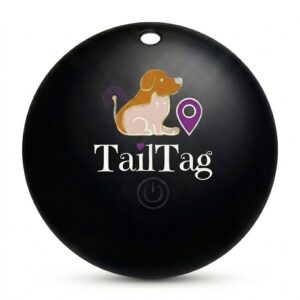
TailTags Smart Pet Tracker Tag – Apple Find My & Android Compatible
The Only AirTag-Style Smart Pet...