How to Choose the Right Recovery Suit Size and Style for Dogs & Cats
Post-surgery and skin-healing made simpler. This friendly, step-by-step guide helps you measure your dog or cat correctly, choose the right style (including spay/neuter and orthopedic needs), and feel confident ordering trusted brands like Suitical and MPS Medical Pet Shirt.
Tip: If you’re choosing between a cone and a bodysuit, a well-fitted recovery suit can protect the incision while helping pets relax, move naturally, and sleep more comfortably.
At a glance: quick size checklist
- Measure three points: back length, chest girth, neck.
- Note sex and surgery type (spay, neuter, TPLO/orthopedic, C-section).
- Check brand size guidance (Suitical, MPS) using your chest and back length first; weight/breed as support.
- Aim for “snug but comfy”: you should fit two fingers under the fabric at neck and chest.
- Toileting plan: pick a male-friendly design or a suit with fold-back lower panel.
Why recovery suits vs cones
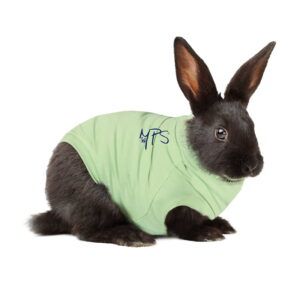
Recovery suits offer full-body coverage that helps:
- Stop licking and nibbling at stitches or hot spots.
- Keep fur and dirt away from wounds.
- Reduce stress for pets who find the “cone of shame” overwhelming.
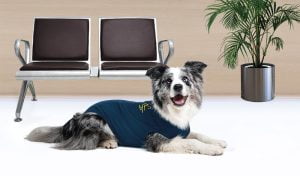
- Allow natural movement, eating, and sleeping.
Some pets still need a cone if they’re determined chewers or can reach the site. Always follow your vet’s advice.
Evidence-informed note: Gentle pressure from close-fitting garments may help some animals relax, and breathable fabrics support normal body temperature—both useful during recovery. For additional reading, see postoperative care guidance from veterinary associations and brand-specific fitting notes (Suitical, MPS).
How to measure: neck, chest, back length (step-by-step)
You’ll need a soft measuring tape and a calm moment.
1) Back length
- Measure from the base of the neck (where a collar sits) to the base of the tail.
- Keep the tape straight along the spine.
2) Chest girth
- Wrap the tape around the widest part of the chest, just behind the front legs.
- This is the most important measurement for a secure, comfy fit.
3) Neck circumference
- Measure where a collar would sit—snug but not tight.
4) Weight and breed notes
- Weight helps confirm your choice, especially for long-bodied (Dachshund) or barrel-chested (French Bulldog) shapes.
- If your pet is young or newly neutered/spayed, allow for mild post-op swelling.
Pro tips
- The two-finger test: you should be able to slide two fingers under the suit at neck and chest.
- Between sizes? Chest girth usually decides. If your pet is very deep- or barrel-chested, consider the larger size in that brand.
Size guidance: Suitical and MPS (dogs & cats)
Each brand’s sizing is slightly different, so match your measurements to their chart (cm/in). Use chest first, then check back length and weight.
Suitical
- Dogs and cats have separate size charts. Compare chest and back length carefully.
- If between sizes, prioritize chest girth for a secure fit.
- See product pages for size support: Shop Suitical.
MPS Medical Pet Shirt
- Consistent, stretchy cotton/elastane blend helps with small variances.
- Select by chest girth; confirm back length coverage for your pet’s surgery site.
- Explore options here: Shop MPS.
Not sure which brand suits your pet’s shape? Start with our Find My Size tool—enter pet type, sex, chest, back length, weight, and breed for a tailored recommendation.
Spay/neuter, orthopedic, skin conditions: what to choose
- Spay (female) and neuter (male)
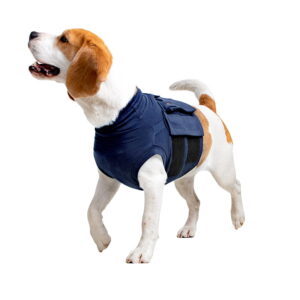
- Look for full abdominal coverage with an easy-to-open lower panel.
- Male-specific designs or fold-back features make pee breaks simple.
- TPLO/orthopedic surgery
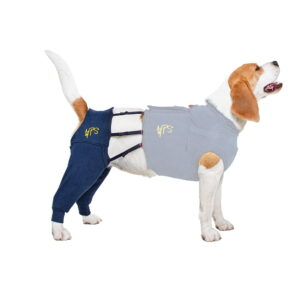
- Choose suits that keep the torso covered while allowing leg movement and exams.
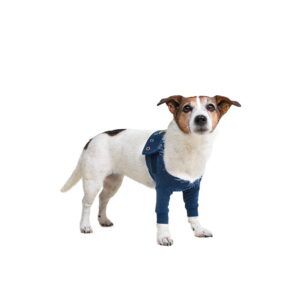
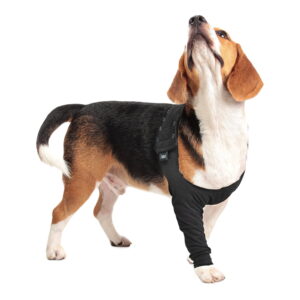
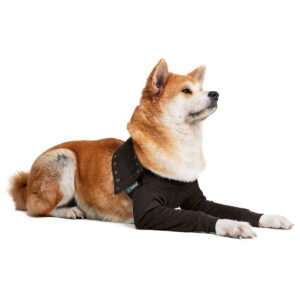
- Consider add-on limb sleeves if recommended by your vet.
- C-section or mammary surgery
- Prioritise soft, breathable material with gentle pressure.
- If nursing, check for accessible panel designs or vet-approved openings.
- Skin allergies, hot spots, dermatitis
- Go for breathable, hypoallergenic fabrics with smooth interior seams.
- A secure, non-rubbing fit helps prevent flare-ups.
Male vs female fit and toileting
Male dogs
- Select a suit with a dedicated pee opening or a quick fold-back lower panel.
- During toilet breaks, unfasten and fold the belly flap as per the brand’s guide.
Female dogs and cats
- Full belly coverage protects the spay site; most suits unfasten at the rear for quick toilet trips.
Cats
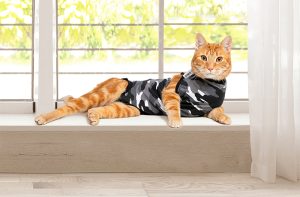
- Choose lighter, flexible fabrics for easier movement and litter tray use.
Practice once at home before that first urgent toilet dash. It’s easy after your first run-through.
Materials, breathability and care
What matters most:
- Breathable, stretchy fabric that’s soft on skin.
- Easy closures (snaps or zips) for quick checks.
- Machine washable, colourfast materials.
Care tips
- Wash on a gentle cycle; air dry to preserve stretch.
- Have 2 suits on rotation so your pet always has a clean one while the other dries.
- Check seams after each wash for any rough spots.
Fit check: too tight or too loose?
A good fit is snug and supportive—never restrictive.
Watch-outs:
- Red marks, chafing, or hair loss at edges.
- Laboured breathing or restricted shoulder/chest movement.
- Sagging fabric that exposes the incision.
- Constant scratching or trying to wriggle free.
If you see any of the above, recheck your measurements and compare with the brand chart. We’re here to help—reach out to our team for a quick re-fit.
Breed-fit tips
- Long-bodied (Dachshund, Corgi)
- Back length may push you up a size—check chest girth still fits well.
- Barrel-chested (French Bulldog, Staffy)
- Size by chest first; choose a model with good shoulder stretch.
- Deep-chested, narrow waist (Greyhound, Whippet)
- Chest decides; ensure the suit doesn’t gape at the waist.
- Cats
- Small and agile—pick lighter fabrics for natural climbing and litter use.
- Maine Coon or larger breeds may need dog-suit sizes with shorter back length.
FAQs
Q: Can my dog or cat pee while wearing a recovery suit?
A: Yes. Most suits have a fold-back lower panel or a male-friendly opening. Unfasten the panel for toilet breaks, then refasten to protect the incision.
Q: How tight should a recovery suit be?
A: Snug but comfortable. You should be able to fit two fingers under the fabric at the neck and chest with no gaping over the wound.
Q: How long should my pet wear a recovery suit after surgery?
A: Commonly 10–14 days, or exactly as your vet advises, until the incision is healed and fur starts to regrow.
Q: Is a recovery suit better than a cone?
A: Many pets find suits more comfortable and less stressful while still protecting the site. Some determined chewers may still need a cone in addition to a suit.
Q: Can dogs and cats sleep in recovery suits?
A: Yes—if the suit is breathable and correctly sized. Check for overheating in warm weather and offer water frequently.
Q: How many recovery suits do I need?
A: Two is ideal—one on your pet, one in the wash.
Q: How do I wash a recovery suit?
A: Gentle machine cycle in cool water; close fasteners first. Air dry to keep the fabric stretchy and soft.
Find my size
- Need help fast? Message our team with pet type, sex, chest girth, back length, weight, and breed—we’ll confirm a brand and size.
Important note
This guide is informational and does not replace your veterinarian’s advice. Always follow your vet’s instructions for fit and how long to wear the suit.