How to Toilet Train Your Cat (Step-by-Step Guide)
Cats are guided by powerful instincts. In the wild, even smaller breeds prefer to hide their scent by burying waste. It’s less about the digging and more about removing smell so bigger predators don’t notice them. Your house kitty hasn’t met a leopard in the hallway, but the instinct remains: if the scent disappears, they feel safe.
That’s the key to successful toilet training. If we help your cat associate the toilet with “no lingering smell,” we can gently transition from litter box (or litter tray) to the human loo.
Why cats bury waste (and how it helps training)
Cats bury to erase scent. If your kitty feels their “business” disappears quickly, they don’t feel the need to cover it. That’s why some scented litters reduce digging — and why a toilet, which removes scent fast, can work beautifully once your cat feels safe around it.
Is toilet training right for your cat? Safety + age
Most healthy adult cats can learn with patience. Consider the following:
- Kittens: wait until at least 3–4 months old. Tiny kittens can struggle with balance.
- Seniors/arthritic cats: a raised toilet can be uncomfortable. Use a sturdy step and move slower, or consider staying with a litter box.
- Mobility issues or post-surgery: avoid toilet training until fully recovered and steady.
- Skittish personalities: go slower; some cats prefer litter long-term and that’s okay.
If you’re unsure, ask your vet — especially if your cat has joint pain, back issues, or chronic conditions.
What you’ll need
- A cat toilet training kit (with removable rings)
Tip: Look for a non-slip base, ring stages, and a snug fit on standard toilets. - A small amount of unscented litter
- High-value treats and praise.
- A non-slip bathroom mat and a stable step/stool.
- Cleaning wipes and enzyme cleaner.
Recommended: our Kitty Toilet Trainer — designed for small bathrooms, easy-clean rings, and steady progress.
How a cat toilet training system works (in plain English)
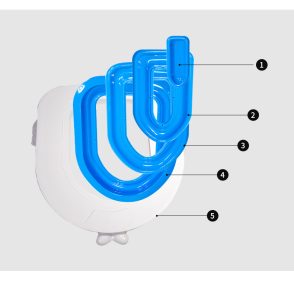
Think of it as a clever litter box that sits on your toilet. You start with a shallow pan (Stage 0) that holds a little litter. The kit has 4 removable rings. Each ring you remove makes the central opening bigger, so your kitty gradually uses less litter and more of the toilet bowl. By the final stage, they’re confidently perching and using the toilet without litter.
Step-by-step: 4 stages to toilet training
Total time: 3–6 weeks for most cats. Move forward only when your kitty is calm and consistent for 2–3 days in a row.
- Stage 0 — Setup (2–5 days)
- Seat up, trainer secured, lid up. Add a thin layer of litter.
- Place the litter box/tray right on the toilet with the trainer so your kitty gets comfy.
- Reward every visit. Keep bathroom door open at all times.
- Stage 1 — Small opening (3–7 days)
- Remove the smallest ring. Use even less litter.
- Encourage perching on the outer edge; steady the seat if needed.
- Reward calm posture and successful use.
- Stage 2 — Medium opening (3–7 days)
- Remove the next ring. Minimal litter; you’re focusing on confidence now.
- Add a non-slip step so jumping/landing is easy.
- If your cat hesitates, leave the bathroom quietly and try again later.
- Stage 3 — Larger opening (3–7 days)
- Remove the third ring. Most cats now balance on the seat.
- Keep the environment predictable: lid up, seat position unchanged, trainer never “mysteriously” removed by guests.
- Stage 4 — Final opening (3–7 days)
- Remove the last ring. No litter needed.
- Continue rewarding for a few days, then gradually fade treats.
- When fully reliable, remove the trainer.
Signs you’re ready to progress: zero accidents, relaxed posture, your cat approaches and uses the setup without coaxing.
Tip: Take photos of each stage to track progress.
Timeline and when to move to the next stage
- Most cats: 21–35 days total.
- Cautious or older cats: 6–10 weeks.
- Progress only after 2–3 consecutive days of success at the current stage.
- If you get two accidents in 48 hours, roll back one stage for 2–3 days, then try again.
Troubleshooting: common problems and fixes
- “My cat won’t use the trainer.”
- Add a pinch more litter, use higher-value treats, and sit quietly in the room. Reassure with a calm voice.
- Roll back one stage for 2–3 days, then retry.
- Fear or avoidance of the bathroom
- Keep the door open, lights consistent, noises low. Place the mat and step where landing feels safe.
- Cat falling in the toilet during training
- Ensure the ring is fully locked and the seat doesn’t wobble. Slow down a stage. Practice short perch sessions with treats.
- Seat position confusion
- Keep a rule: lid up, seat down (or your chosen setup) all the time. Tell housemates and guests.
- Multi-cat conflicts
- Train one cat at a time. Provide at least one backup litter box/tray elsewhere to prevent accidents or holding.
- Guests removed the trainer
- Put a friendly note in the bathroom: “Kitty in training — please don’t move the ring.”
- Accidents outside the bathroom
- Clean with enzyme cleaner, not ammonia. Reduce freedom briefly and rebuild the routine.
If you hit a wall, it’s okay to stop and return to a litter box — your kitty’s welfare comes first.
Multi-cat homes and small apartments
- Multi-cat: Train the most confident cat first. Keep a regular litter box/tray available to reduce stress. Rotate training access if needed.
- Small apartments: A toilet trainer is a space-saver. Use a slim, sturdy step and a non-slip mat to keep movements safe in tight quarters.
Pros and cons vs. litter box (costs, odor, hygiene)
Pros
- Less odor when used correctly (scent is removed fast).
- Space-saving — great for apartments.
- Long-term savings on litter.
Cons
- Not ideal for cats with mobility issues.
- Requires routine consistency (seat/lid position).
- Some households prefer not to flush cat waste (see hygiene notes below).
Mini cost check
- Add up your monthly litter spend (e.g., R300–R600).
- Compare with the one-time price of a cat toilet training kit.
- Typical break-even: often 2–5 months, then mostly savings.
Hygiene and flushing guidance
- Flushing cat waste is clean and easy.
- If you don’t flush:
- Scoop into a sealed, lined bin; tie off and dispose per municipal guidelines.
- Wipe the seat and trainer daily; wash hands after handling waste.
- Pregnant or immunocompromised? Avoid direct contact with cat waste and consult your healthcare provider.
When toilet training isn’t a fit + gentle alternatives
- Try a high-sided or top-entry litter box to reduce scatter.
- Use a quality odor-control or plant-based litter.
- Consider a self-cleaning litter box for convenience.
- Keep boxes in low-traffic, well-ventilated spots; add a good litter mat.
Need help choosing? Reach out or browse our Cats category.
FAQs
Q: How long does it take to toilet train a cat?
A: Most cats need 3–6 weeks. Cautious or older cats may need 6–10 weeks. Always progress based on your kitty’s comfort.
Q: What age can you toilet train a cat?
A: From around 3–4 months for confident kittens; many families wait until 6 months. Tiny kittens and seniors need extra care or may do better with a litter tray.
Q: Is cat toilet training safe and humane?
A: Yes, if done slowly and kindly. Never punish accidents. Skip toilet training for cats with pain, poor balance, or post-surgery recovery.
Q: Can multiple cats share one toilet trainer?
A: Yes, but train one at a time and keep a backup litter box to prevent stress.
Q: What if my cat falls in?
A: Secure the ring, add a non-slip step, slow down a stage, and offer extra rewards. Most cats regain confidence quickly.
Q: Do I need special litter during training?
A: Use a small amount of unscented litter. Avoid clumping or “flushable” litter if your local rules advise against flushing.
Q: Should I flush cat waste?
A: Check local. If unsure, bag and bin waste in a sealed liner and clean the seat after each use.