How to Track a Running Dog: Overcoming Velocity, Adrenaline & Distance

When a cat escapes, it hides within metres. When a dog escapes, it sprints.
Driven by thunderstorms, fireworks, prey drive, or the simple opportunist thrill of an open driveway gate, a dog can cover kilometres in minutes. Walking down the pavement shaking a box of biscuits is useless when your pet is already two suburbs away.
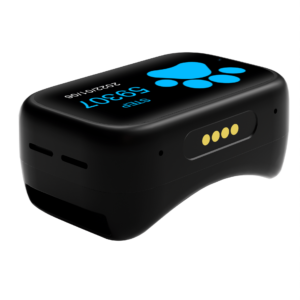
Because canine escapes are defined by speed and distance, dog tracking isn’t about coaxing a hidden pet out of a bush—it is built for instant vehicle interception. Bringing a running dog home safely demands quality locations, rugged submersible waterproofing, and deep battery reserves capable of sustaining a search across open terrain.
The Escape Reality: Velocity & Scent Locks
To stop a runaway dog, you have to understand the mechanics of how—and why—they run. Unlike cats, dogs do not look for cover when they slip the property; they accelerate:
- The Gate Dash: The most common everyday escape. Dogs are masters of timing, squeezing past visitors, delivery drivers, contractors, or slow-closing automated driveway gates before you even hear the motor click.
- Panic Sprints: Sudden afternoon thunderstorms and fireworks trigger a primal fight-or-flight response. In blind flight, surging adrenaline pushes dogs to scramble over high perimeter palisades, tear through wooden fencing, and sprint across multi-lane highways without looking.
- Scent-Locked Chases: Terriers, hounds, and working breeds don’t need fear to make them run. The moment they catch the scent of a hare, guinea fowl, or stray cat, their brains lock in. They will run for kilometers in a straight, relentless line, completely deaf to your recall commands.
The Decision Rule: A running dog can easily cross three suburbs in 15 minutes. You cannot rely on passive location updates; you need to act quicker.
Interception Speed: “Deep Sleep” vs. Always-On Connectivity
When shopping for a GPS tracker, many pet owners are seduced by claims of “weeks-long battery life.” In an emergency, the technology used to achieve that battery life can be fatal.
- The Danger of Extreme Battery Saving (Deep Sleep): To stretch a small battery for weeks, some trackers completely power down their cellular modems, only waking up every 4 to 12 hours to check in. If your dog bolts through the gate at 4:05 PM, you could face a multi hour delay before the device even wakes up. By then, your dog is in another location.
- Always-On Standby (On-Demand Live Tracking): The best option here is a tracker that keeps its modem actively connected to local mobile networks in a low-power state. The very second you realise the driveway gate was left open, you tap “Live Track” on your phone to initiate real-time, second-by-second breadcrumb tracking.
- Long Battery: Where a permanently active connection isn’t available, a long battery is your friend. Although these tracker should send location data every 5 to 10 minutes.
The Decision Rule: Flight-risk dogs, anxious breeds, and gate-dashers require always-on connectivity. Deep-sleep modes should only ever be reserved for calm, older pets living on vast, securely fenced acreage.
The “Home Beacon” Power Saver
How do you keep a tracker in an “always-ready” state without having to charge it every single afternoon? You stop it from fighting your roof.
The Indoor Drift Problem
When an ordinary GPS tracker sits indoors under concrete tiles or metal roof sheeting, it suffers from “satellite drift.” It boosts its power to maximum trying to see through the ceiling, draining the battery rapidly and bouncing phantom coordinates down the street—triggering false escape alerts on your phone while your dog is fast asleep on the lounge rug.
The Smart Beacon Solution
By pairing the tracker with your home Wi-Fi network and a dedicated Bluetooth base beacon, the device recognises its home signature. As long as your dog is inside the house or lounging on the patio within range of the beacon, the power-hungry GPS engine stays in a dormant standby mode.
The Result: Zero false escape notifications at 2:00 AM, and much of your battery capacity is conserved for the exact moment your dog actually leaves the property boundary.
Multi-Layered Search Tech: From Highways to Culverts
An escaped dog’s behaviour changes once the initial burst of adrenaline wears off. After sprinting across open ground, exhaustion sets in, and they finally look for somewhere dark and cool to catch their breath. Your tracker must be able to handle both phases of the escape:
- Satellite GPS (The Sprint Phase): Tracks high-speed movement in real time across suburban streets, parks, golf courses, and open veld.
- Wi-Fi Sniffing & LBS Backup (The Exhaustion Phase): When an exhausted, terrified dog finally crawls into a concrete stormwater culvert, hides beneath a motorway bridge, or collapses under a neighbour’s carport, satellite signals are blocked. The tracker automatically falls back on Wi-Fi router sniffing and Cell Tower Triangulation (LBS) to maintain your search perimeter.
- Sound Alerts (The Final Approach): If your dog has wedged themselves into dense thorn scrub or unlit parkland at night, visual spotting fails. Within close range, you can trigger a sound on the collar to lead you straight to their bush. (Only the Nimble Pro).
Environmental Ruggedness & Canine Anatomy
Built for Brambles and Rivers
Fleeing dogs do not steer around mud, rivers, or rain. An overheated dog mid-chase will plunge headfirst into a muddy dam, dive into a neighbour’s swimming pool, or scrape violently through dense brambles and palisade fencing.
You shouldn’t have to worry about hardware failure mid-chase. High-grade dog trackers are built with high-impact polycarbonate casings and sealed to IP67 submersible waterproof standards.
The Decision Rule: Don’t stress about weatherproofing—it is built in by default. Focus instead on choosing a heavy-duty, secure collar or harness mount that cannot be torn free when your dog barges through thick brush.
Battery Reserves vs. Canine Strength
Sending live satellite updates every few seconds uses significantly more power than passive monitoring. Fortunately, canine anatomy gives you a massive advantage.
Dogs have broad chests and strong neck musculature; a 40g unit is practically unnoticeable to most breeds.
The Decision Rule: Take full advantage of your dog’s carrying capacity. Always pick the largest battery model your dog’s frame can comfortably support. If an emergency search stretches overnight into rural terrain or nature reserves, those deep battery reserves are what will bring them home.
Real-World Scenarios: Canine Behaviour in Action
To see why velocity, ruggedness, and battery reserves matter, look at these four common scenarios based on real-world dog behaviour.
Scenario 1: The New Year’s Firework Sprint (The High-Speed Intercept)
“A panicked dog doesn’t look both ways. Velocity kills.”
- The Panic: A sudden crack of unauthorized fireworks—or an afternoon highveld thunderstorm—rolls in. In a blind surge of adrenaline, your dog scrambles over a six-foot boundary wall. By the time you notice, they have been running flat-out for eight minutes. A panicked dog can cross two kilometres in under ten minutes, heading straight toward multi-lane traffic, blind to oncoming taxis and trucks. Running down the street calling their name on foot is completely useless.
- Live Vector Tracking: You grab your car keys and open the live map. Because your tracker has always-on connectivity, you don’t just see an old, stationary pin—you activate Live Track and watch their movement trail updating every few seconds.
- Reading the Path: You see they bolted across the greenbelt, turned down a side avenue, and are currently running parallel toward a busy main arterial road.
- The Intercept Cut-Off: Instead of chasing behind them, you use the live telemetry to get ahead of them. You drive two blocks past their current position, pull over across their line of travel, and step out onto the pavement.
- The Rescue: Thirty seconds later, your exhausted, wide-eyed dog rounds the corner directly into your arms—intercepted safely before ever reaching the intersection.
Scenario 2: The “Prey-Drive” Greenbelt Vanishing Act
“When the nose takes over, the ears shut off.”
- The Behaviour: You are enjoying an off-lead weekend walk in a sprawling nature reserve or greenbelt. Suddenly, your terrier or hound flushes a hare or spots a troop of vervet monkeys. Instantly, they are scent-locked. You blow your whistle and shout yourself hoarse, but their prey drive overrides everything. Within ninety seconds, they vanish over a ridge into thick bushveld.
- The Terrain Challenge: In undulating, overgrown terrain, a dog can drop into a dry riverbed or dense thicket and become completely invisible from ten metres away. Worse, they may splash through a vlei or muddy stream during the chase, destroying cheap electronics.
- The Multi-Layered Track: Your IP67 waterproof tracker shrugs off the mud and water. You follow the satellite GPS pin across two kilometres of rough trail until the map shows the dog has stopped moving in a dense patch of indigenous bush.
- The Rescue: The bush is too thick to see through, so you switch on the collar’s Audible Sound Beacon and follow the short-range Bluetooth radar. Guided by the steady chime, you push through the branches to find your dog panting happily beside a burrow—tired, muddy, and completely oblivious to your stress.
Scenario 3: The “Contractor Gate” Opportunist (And the Friendly Kidnapper)
“Not every runaway stays on foot—sometimes they get picked up.”
- The Behaviour: Garden service contractors or fibre installers prop your pedestrian gate open with a brick for just two minutes. Your overly friendly Labrador or Golden Retriever casually strolls out onto the street to explore the neighbourhood.
- The Plot Twist: Ten minutes later, a well-meaning motorist spots your dog wandering near a busy road, opens their car door, and your dog happily jumps onto their back seat. The driver heads off toward a vet clinic in the next suburb—right in the middle of their morning errands.
- The Geofence & Velocity Clue: The moment your dog stepped out the gate and lost connection with the Home Beacon, your phone pinged with a boundary alert. When you check the map five minutes later, the live breadcrumb trail shows your dog moving down a main road at 60 km/h.
- The Rescue: You immediately realise no dog runs at 60 km/h—they are inside a vehicle. You follow the live trail as the car pulls into a suburban veterinary clinic four kilometres away. You walk through the vet’s front doors just as the receptionist is scanning your dog for a microchip, turning a terrifying disappearance into a ten-minute pickup.
Scenario 4: The “Post-Storm Culvert” Collapse
“What starts as a sprint always ends in a hideout.”
- The Behaviour: A massive hailstorm hits while you are stuck in evening traffic. Terrified by the deafening noise on the roof, your dog forces their way through a security gate latch and bolts into the pouring rain. By the time you get home forty minutes later, the storm has passed, and it is pitch dark.
- The Exhaustion Phase: Dogs cannot sprint forever. After twenty minutes of panicked running, your dog’s muscles gave out. Shivering and disoriented in a strange industrial area a mile away, they crawled deep inside a concrete stormwater culvert beneath a railway bridge to hide.
- The Dead-Spot Fallback: Beneath tonnes of concrete and earth, pure satellite GPS goes dark. However, your tracker’s historical playback shows the exact path of the sprint leading right up to the railway bridge, and the Wi-Fi / LBS fallback locks the perimeter down to that exact crossing.
- The Rescue: You drive to the bridge with a torch. The live GPS pin stops right at the edge of the road embankment. You trigger the sound beacon via Bluetooth, and a faint, echoing chime rings out from the mouth of the concrete storm pipe below. A quick climb down the bank reunites you with a soaking wet, relieved dog who was too exhausted to crawl back out on their own.
Related Products


Infinity Pro Extended-Battery GPS Dog Tracker (Up to 10-Day Battery)
The 10-Day Long-Battery GPS Dog...
TailTags Smart Pet Tracker Tag – Apple Find My & Android Compatible
The Only AirTag-Style Smart Pet...